
Timeless Creations
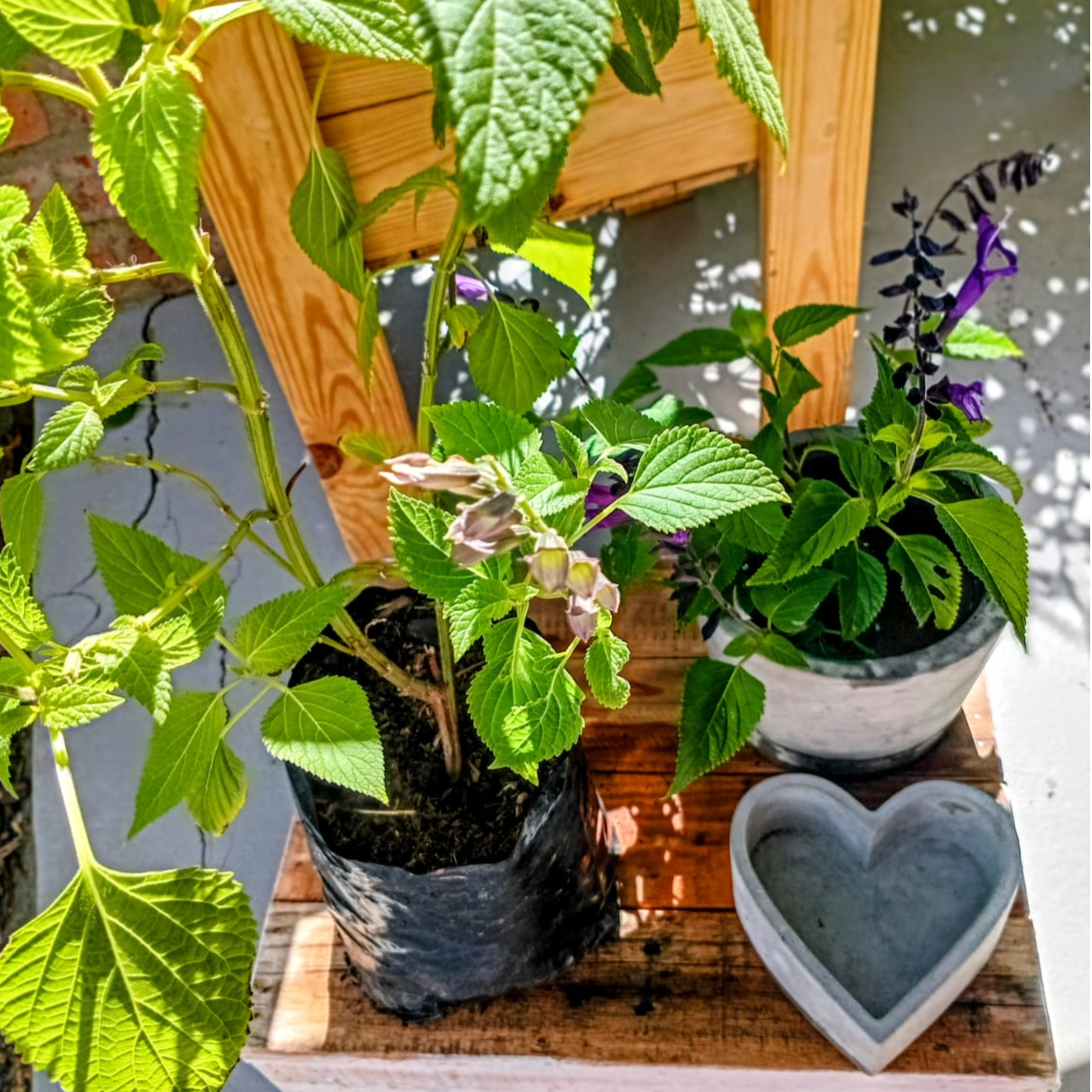
Friendship Sage (Salvia)
From R55,00
Care Instructions
Sunlight: Friendship Sage thrives in full sun, requiring at least 6 hours of direct sunlight each day for optimal blooming. While it can tolerate some partial shade, too little sun may reduce the number and vibrancy of flowers.
Water: Water regularly during the active growing season, letting the soil dry out a bit between waterings. Once established, Friendship Sage is somewhat drought-tolerant and does not like soggy soil.
Pruning: Prune back in late winter or early spring to remove old growth and encourage fuller, bushier new growth. Deadheading spent blooms can help extend the flowering period.
Container Growing: Friendship Sage adapts well to containers with good drainage. It makes a striking addition to patios, decks, and balcony gardens, or as an accent in mixed planters.
Health Benefits
- Generally not used as an edible herb, but some people use the flowers in herbal teas for their mild, calming qualities. Always confirm safety and proper identification before any consumption.
- Air purification: Like other salvias, Friendship Sage helps improve air quality by absorbing carbon dioxide and releasing oxygen in your garden or home.
- Low-water needs: Once established, Friendship Sage is adapted to dry conditions, making it a sustainable option for water-wise landscapes.
Wildlife and Garden Advantages
The deep purple flowers of Friendship Sage are a magnet for hummingbirds, bees, and butterflies, making it an excellent plant for supporting pollinator habitats. Its dense foliage provides shelter for helpful insects. Friendship Sage is non-toxic to pets and wildlife, and is often used as a colorful border, informal hedge, or standout feature in gardens. Its robust growth can help stabilize soil and prevent erosion.
Culinary Uses
Friendship Sage is not typically used as a culinary herb. While some gardeners use its flowers as a decorative garnish, consumption should be minimal and only after verifying the plant’s identity and safety. Its greatest value is in its ornamental beauty and its benefit to pollinators, rather than as a food plant.
Flower Features
Friendship Sage produces striking, velvety spikes of rich purple flowers from midsummer well into fall. The dramatic blooms brighten up gardens and attract a wide range of pollinators. Its lush, deep green, lance-shaped leaves provide attractive foliage throughout the growing season.